What New Apparel Brands Get Wrong About Choosing a Private Label Manufacturer
If you’re building an apparel brand, the manufacturer you choose will quietly decide your margins, your reorder timeline, and how many awkward conversations you have with customers about a shipment that doesn’t match the sample. Most of that gets decided before you ever place an order — in how a factory prices minimums, structures sampling, and defines what “passing inspection” actually means.
Founders rarely lose money on a bad design. They lose money on a bad process: a sample that looked right, a bulk order that didn’t match it, and a factory that stopped explaining why somewhere around week three. This article walks through the mechanics that actually determine whether a first production run goes well—not the surface-level checklist (“ask about MOQ, ask about quality control”) every sourcing article repeats, but the reasoning underneath it.
It applies whether you’re launching a streetwear hoodie line, outfitting a softball team, or building a blank-apparel wholesale catalog. The underlying mechanics — how MOQ gets set, how sampling actually reduces risk, what quality control needs to mean to be worth anything — barely change by category, even though the finished product looks completely different.
RebornWear is a factory-direct private label apparel manufacturer based in Sialkot, Pakistan, producing both streetwear — hoodies, sweatshirts, joggers, jackets, blank apparel, tote bags — and sportswear, including team uniforms, for brands, dealers, schools, and clubs across the US. Everything below applies whether you end up working with us or someone else. The goal here is a better-informed decision, not a sales pitch.
At a Glance: What You’ll Learn
- Why two factories quote different MOQs for the same product — and what that number actually reflects
- How sampling really works, and the one thing that determines whether it protects you
- What “quality control” needs to include before the phrase means anything
- The real difference between private label and OEM, and why it matters for your launch
- Whether a factory-director or a sourcing agent fits your situation better
- Why sea freight quotes almost never match your actual delivery timeline
- The exact questions to ask before any deposit changes hands
Key Takeaway: A private label apparel manufacturer ships clothing branded under the buyer’s own labels, not the factory’s — whether that’s a streetwear hoodie line or a full team uniform kit. Nearly every manufacturer offers this at a surface level. What separates a good partner from a mediocre one is how deep that customisation goes and how transparent the factory is before money changes hands.
Why “Good” and “Bad” Manufacturers Isn’t the Right Framing
Buyers tend to explain a rough production experience by concluding the factory was bad and a smooth one by concluding it was good. That’s usually the wrong lens. Every factory runs several buyers’ orders at once — a streetwear hoodie run alongside a team jersey order alongside a blank t-shirt reorder — and how much floor time and attention your order gets is largely a function of where it sits in that internal queue, not a fixed standard of service applied equally to everyone.
Factories allocate attention based on signals of reliability: a confirmed spec, deposits paid on schedule, and expectations that match reality. A first-time buyer showing up with an unconfirmed design and a small order starts near the back of that line, whether the product is a custom jogger or a custom jersey. That’s not the factory being dismissive — it’s protecting throughput for orders that are further along and better defined.
Picture two buyers contacting the same factory in the same week: one has a confirmed spec sheet, an approved colour, and a deposit ready to send. The other is still deciding between two fabric weights and hasn’t settled on a size range. Identical factory, identical week — but very different response times, for reasons that have nothing to do with how much the factory values either buyer.
This reframes how you should read early friction. A slower initial response isn’t automatically evidence of poor communication — it might just be queue position. What’s actually worth noticing: a factory that can’t tell you where your order stands or gives a timeline that clearly doesn’t account for its own current workload.
Key Takeaway: Production responsiveness is usually about queue position, not general competence. A slow start with a new manufacturer isn’t necessarily a red flag — a factory unable to explain your order’s status at all is.
The Part Nobody Explains: Where MOQ Actually Comes From
Almost every manufacturer’s website lists a minimum order quantity. Almost none explain where that number comes from—which is unfortunate, because the explanation is the single most useful thing to understand before comparing quotes, whether you’re pricing hoodies for a streetwear drop or jerseys for a league.
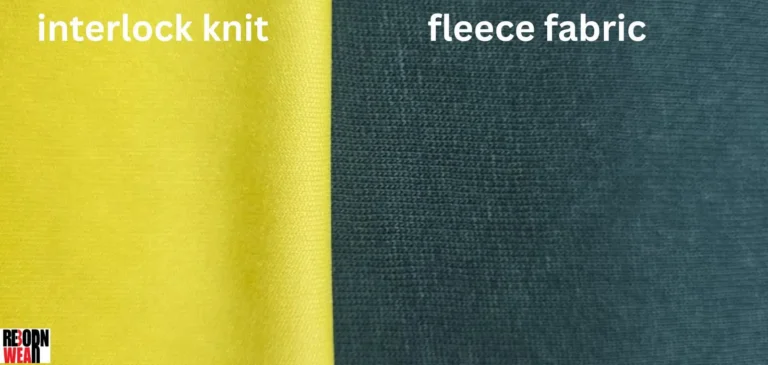
MOQ is largely inherited from the fabric mill, not invented by the garment factory. Mills set their own minimums per colour — usually measured in kilograms of fabric, not garment count — because running a dye batch has fixed setup costs no matter how small the order is. A stock colour the mill already holds in bulk inventory carries a much lower effective minimum than a custom colour, which requires a dedicated dyeing batch just for you. The mechanic is identical whether it’s a custom heather-grey streetwear sweatshirt or a custom team-colour jersey — only the fabric type differs.
Take two founders launching the same hoodie design in the same week. One picks a standard black — a shade every mill in the supply chain already stocks in bulk. The other wants a very specific muted olive, matched precisely to a brand mood board. The first founder can likely order at the factory’s stated MOQ. The second may hit a wall they didn’t see coming: the mill won’t dye that shade below its own minimum batch size, which can push the real commitment well past what the garment factory quoted. Same hoodie, same factory, completely different cost structure — because of one colour decision.
This is why two factories can quote different MOQs for what looks like an identical hoodie: one may be pricing against fabric already sitting in a warehouse, the other against a custom shade that triggers a full-mill dye minimum; neither of you can shrink. If you’re planning a specific brand colour, ask directly whether it’s a stock shade or a custom dye lot — and if custom, ask for the mill-level minimum separately from whatever number the garment factory quotes you.
RebornWear’s confirmed minimums vary by category for exactly this reason — different garments carry different production economics, spanning both the streetwear and team-apparel sides of the business:
| Product Category | Minimum Order Quantity |
|---|---|
| Custom Hoodies | 50 pcs |
| Sweatshirts / Blank Sweatshirts | 50 pcs |
| Streetwear Jackets | 50 pcs |
| Custom T-Shirts / Blank T-Shirts | 100 pcs |
| Beach Blankets | 500 pcs |
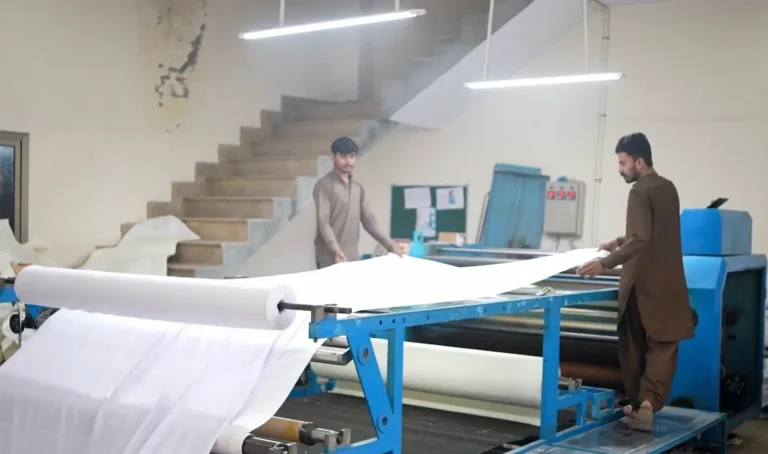
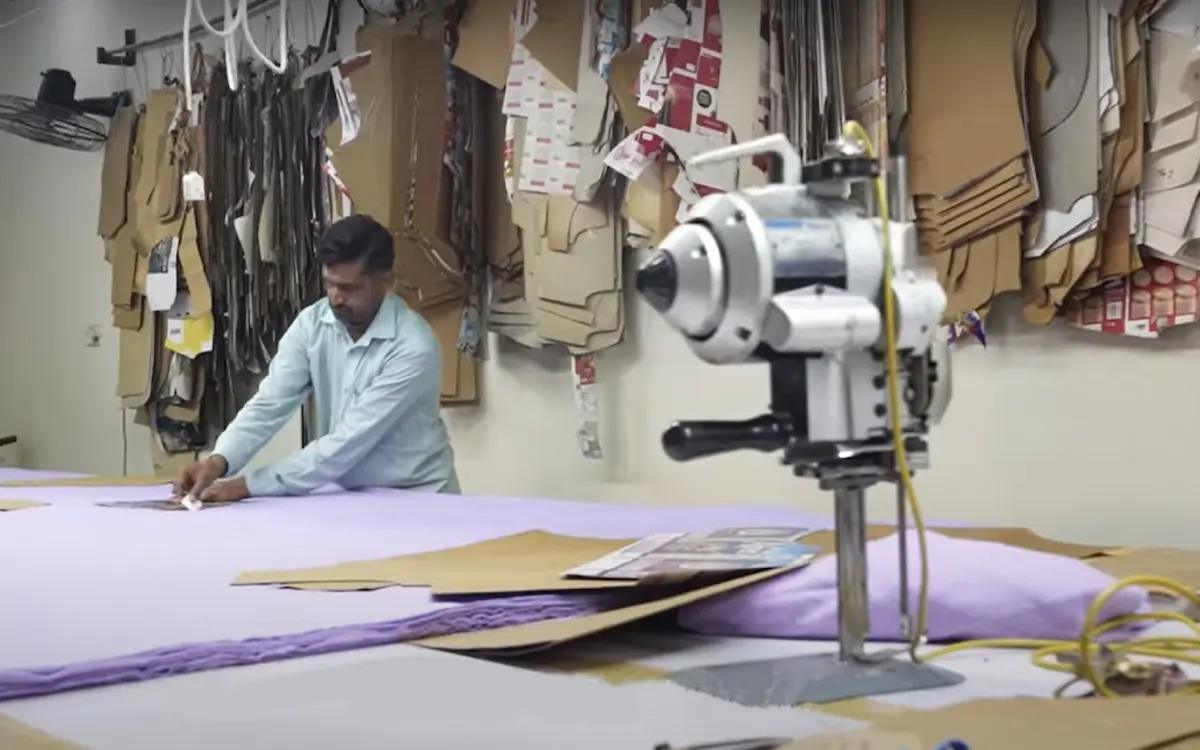
There’s a second cost factor buried in here that almost nobody mentions: marker efficiency. A marker is the layout of pattern pieces on a roll of fabric before cutting, and marker efficiency is the percentage of that fabric actually used versus wasted as scrap. A size run clustered around a few adjacent sizes lays out tightly and wastes little. A run spanning youth, small, all the way to adult 3XL creates awkward, irregular shapes on the same marker, lowering fabric utilisation and raising real cost per unit — even at an identical total quantity. This affects a streetwear jogger line offering an extended size range just as much as it affects a youth-through-adult team uniform order.
Key Takeaway: MOQ is mostly set by the fabric mill’s dye lot minimum, not the garment factory alone — stock colours have lower effective minimums than custom ones. A wide size range also raises cost per unit by lowering marker efficiency, whether you’re ordering hoodies or jerseys.
Sampling Is Where Most First Orders Actually Go Wrong (Or Don’t)
Every sourcing guide tells you to get a sample before committing to bulk production. True, but that advice stops one layer too shallow. The real question is whether the approved sample becomes the enforced standard the bulk run gets measured against — or a loose inspiration nobody holds the factory to once cutting starts.
There’s a structural reality most buyers don’t know to ask about: the sample room and the bulk production line are usually two separate teams with two separate capacity limits, and the sample room is almost always the more crowded one. Every active buyer wants a sample right now — whether they’re sampling a streetwear hoodie, a private-label t-shirt, or a sublimated jersey — while bulk orders, once confirmed, get staggered across a longer schedule. A slow sample turnaround is frequently a queue problem in a smaller, higher-demand resource, not evidence of a disorganised factory.
Given that, the more useful question isn’t “How long will my sample take?” It’s how many other samples are ahead of yours and how many revision rounds are included in the sampling cost before extra charges apply. That second detail is a genuinely hidden cost. A first sample rarely nails fit, colour, and print placement simultaneously on a new design — manufacturers vary widely in how many free revisions they build into a sampling fee before charging for another round.
Consider a brand sampling its first embroidered jacket. Round one arrives with the logo slightly too large and positioned a few millimetres off-centre — a completely normal first-round outcome, not a sign of a bad manufacturer. What determines whether this is a minor speed bump or a budget problem is whether that correction falls inside an included revision round or triggers a new sampling fee.
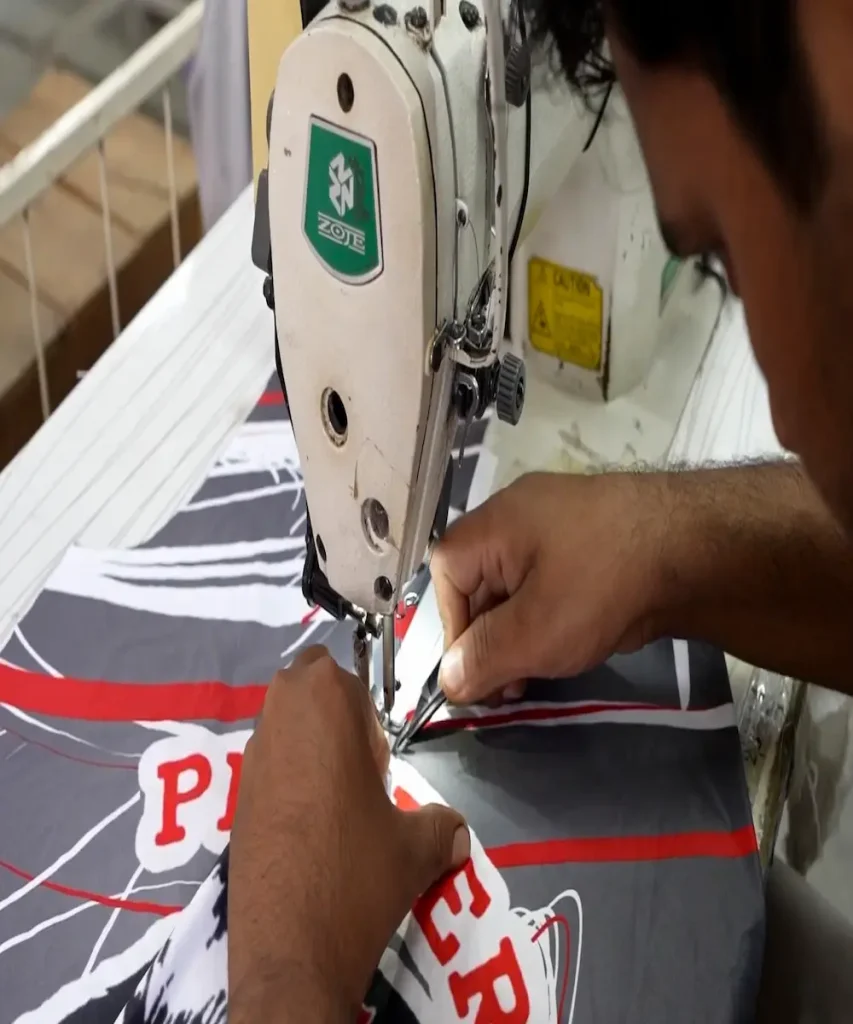
What a sampling stage should verify, regardless of product or vendor:
| Checkpoint | What It Actually Verifies |
|---|---|
| Fit | The pattern matches the agreed-size spec and was checked on a physical garment |
| Fabric | GSM and composition match spec — not a visually similar substitute |
| Print / embroidery | Placement, stitch density, adhesion (heat transfer or screen print), and — for sublimation — dye penetration and edge bleed |
| Construction | Seam strength, stitch consistency, hem allowance, and for hoodies/jackets, hardware attachment (zippers, drawcords, snaps) |
Key Takeaway: Sample rooms are typically scarcer than bulk production capacity, so delays are often a queue issue, not a competence issue. What matters most is whether the approved sample becomes the binding reference for bulk production — and how many revision rounds are included before extra cost applies.
Quality Control That Means Something vs. Quality Control That’s Just a Sentence
Nearly every manufacturer’s website says some version of “we do quality control”. On its own, that’s a meaningless sentence, because it doesn’t say against what standard. The industry term that actually makes it measurable is AQL — Acceptable Quality Level — which defines how many units get pulled from a batch for inspection and how many defects in that sample trigger rejection of the whole lot.
Asking “What AQL level do you inspect against?” gets a far more useful answer than “Do you do quality control?” The second question always gets a yes. The first reveals whether that yes is backed by anything specific. AQL 2.5 for major defects is a common industry reference point, but the level actually applied should be confirmed for your order rather than assumed.
Picture a 200-piece order at AQL 2.5: the inspector doesn’t check all 200 units — a defined sample size is pulled and checked against a specific defect threshold. If the sample passes, the whole batch ships. That’s not a loose promise — it’s a statistical rule, and a manufacturer who can state which one they use is telling you something concrete about how rejection actually gets decided.
The specific defect worth checking for differs by product and decoration method. For sublimation printing—common on team jerseys and performance uniforms—there’s a failure mode generic apparel QC doesn’t cover: dye migration and edge bleed at seams, where sublimated ink can shift slightly during heat-setting, most visibly at high-contrast colour boundaries near a seam. For screen-printed or embroidered streetwear pieces — hoodies, sweatshirts, graphic tees — the equivalent checkpoints are ink cracking or fading after wash-testing and embroidery thread tension and backing removal on the inside of the garment. Different decoration method, same underlying discipline: know the specific failure mode before you need to catch it.
A defensible inspection process runs through several checkpoints in sequence, not one at the end:
- Fabric inspection on arrival — GSM, weight, defects, and for sublimation, base fabric whiteness, since colour accuracy depends on a consistent white base
- Pattern and grading verification across the full ordered size range
- In-line inspection during sewing — catching problems mid-batch instead of after the whole run finishes
- Colour matching against a locked Pantone reference, or an approved digital proof for sublimated designs
- Pre-shipment inspection at a stated AQL level, checked against the original approved sample
Key Takeaway: “Quality control” only becomes a real, checkable claim once tied to a stated AQL level. The specific defect to watch for depends on the decoration method — dye migration for sublimation, print cracking or thread tension for screen print and embroidery.
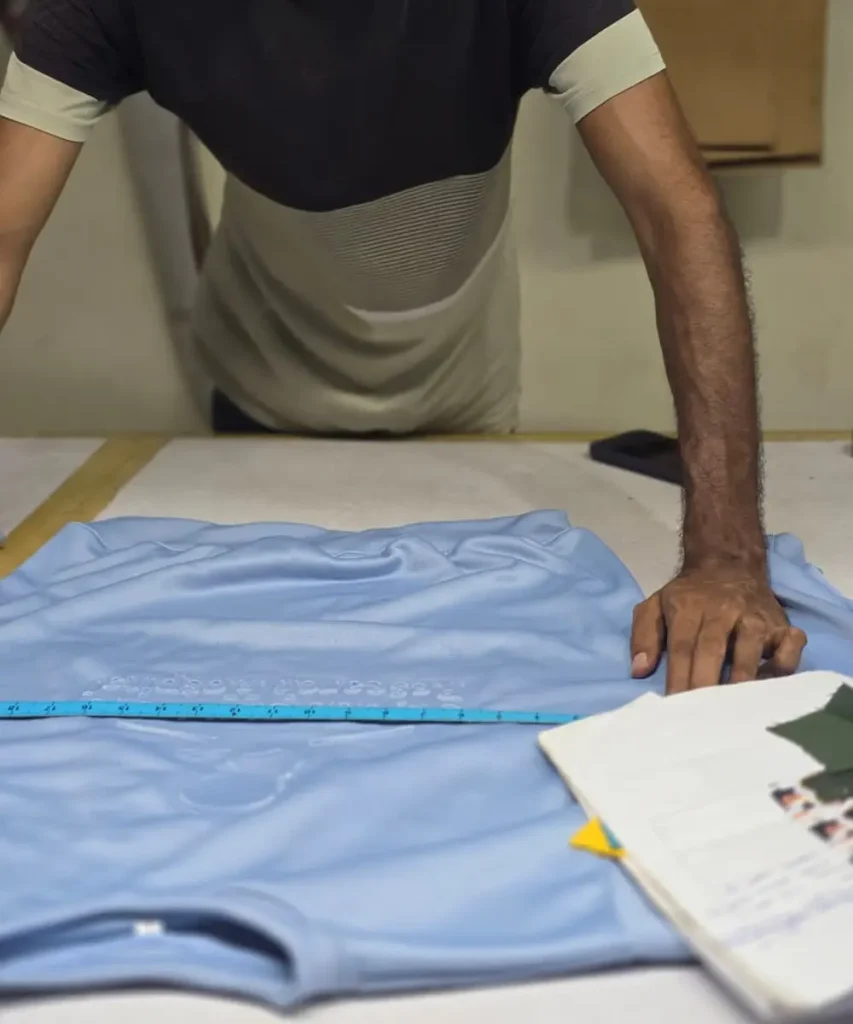
“Private Label” Isn’t One Thing
Private label gets treated as a binary — a factory offers it or it doesn’t. In practice it has depth, and most brands only ever ask about the shallowest layer. A manufacturer can sew your woven label into a hoodie or jersey while sourcing completely generic, unbranded zippers and drawcords from whatever’s in stock. That’s a different level of commitment than a factory willing to colour-match trim or brand hardware specifically for your line.
| Depth Tier | What’s Actually Customised |
|---|---|
| Surface | Woven label, hangtag, poly bag branding |
| Structural | Above, plus custom trim colour-matching (zipper tape, drawcord colour on hoodies and jackets) |
| Full private label | Above, plus branded hardware — embossed snaps, branded zipper pulls |
Most new brands genuinely only need the surface tier at launch, and that’s a reasonable place to start. The problem shows up later — a brand notices a competitor’s jacket has colour-matched zipper tape and branded pulls, something their own factory never mentioned was possible, simply because nobody asked.
Private label vs. OEM — the difference that actually matters:
| Private Label | OEM (Original Equipment Manufacturing) | |
|---|---|---|
| Design origin | Existing base pattern, customised with your branding and trim | Fully custom construction built from your spec |
| Speed to market | Faster | Slower — more is built from scratch |
| Best fit | Brands launching with a proven garment style — hoodies, tees, joggers, standard team uniforms | Brands with a design that doesn’t exist as a base pattern anywhere |
Key Takeaway: Private label ranges from surface branding (labels, hangtags) to full private label (branded hardware, matched trim). Knowing which tier a manufacturer actually offers — rather than assuming the deepest one — avoids a mismatch you’d otherwise only notice later.
Factory-Direct vs. Sourcing Agent: A Bandwidth Question, Not a Trust Question
This gets framed as trustworthy-factory-direct versus markup-hiding-agent, which caricatures both. The actual trade-off is whose bandwidth you’re renting. A sourcing agent earns their keep coordinating across several factories and product categories through one relationship — useful if you’re sourcing streetwear from one factory, tote bags from another, and team uniforms from a third. Going factory-direct trades that coordinate convenience for a shorter, more direct feedback loop within a single category.
| Factor | Factory-Direct | Sourcing Agent / Trading Company |
|---|---|---|
| Who answers production questions | The team on the floor | An intermediary relaying to the factory |
| Coordinating multiple factories | Not applicable | The agent’s core value |
| Communication speed | Fewer relay steps | Depends on the agent |
| Best suited to | A buyer focused on one category, or one manufacturer covering multiple categories | A buyer managing several unrelated categories through one contact |
Neither approach changes the queue-position reality described earlier — a first-time buyer going factory-direct starts in roughly the same relative position a first-time buyer using an agent would. The difference is only in who’s the one telling you that. A manufacturer covering multiple categories under one roof — streetwear and teamwear both — removes part of the coordination problem an agent would otherwise solve, since you’re not bridging two unrelated factories yourself.
key Takeaway: Factory-direct and sourcing agents solve different problems — bandwidth and coordination, not honesty. A manufacturer that covers multiple categories itself can reduce the need for an agent in the first place.
Why Your Sea Freight Timeline Never Matches the Quote
Sea freight quotes almost always read as if your order fills its own shipping container. A first-order well under a full container’s volume usually ships LCL — less-than-container-load — consolidated with other shipments into a shared container, then deconsolidated at the destination port before your goods move on. That process adds real time on both ends that a bare “vessel transit” number doesn’t capture. This holds whether your shipment is a pallet of hoodies or a pallet of jerseys.
That’s the actual reason a quoted sea freight timeline routinely runs longer than expected for a smaller order — the number you were given described transit only, not the wait to gather enough combined volume to fill a container, or the customs clearance and deconsolidation window once it lands.
| Method | Tradeoff |
|---|---|
| Sea freight (LCL) — typical for first orders | Lower cost, but real timeline includes consolidation and deconsolidation beyond transit |
| Sea freight (FCL) — full container | Better per-unit freight cost, economical only at higher volumes |
| Air freight | More expensive, considerably faster, no consolidation delay |
Ask directly whether your order ships LCL or FCL, and get the full timeline, including consolidation and port deconsolidation — not just the vessel transit portion — before comparing it against an air freight quote.
key Takeaway: Sea freight quotes usually describe vessel transit alone. Smaller orders typically ship LCL, adding consolidation and deconsolidation time on both ends — always ask for the full door-to-door timeline, not just transit.
The Questions Worth Asking Before Any Deposit
These six questions reveal more about how a manufacturer actually operates than any unit price comparison will — and they apply whether you’re ordering hoodies, joggers, tote bags, or team uniforms:
- Is the colour I want a stock shade or a custom dye lot, and does that change the real MOQ?
- How does my size range affect marker efficiency and cost per unit at the same total quantity?
- Where does my order sit in the sample queue right now, and how many revision rounds are included?
- What AQL level is used at pre-shipment inspection?
- What decoration-specific defect should I be checking for—dye migration for sublimation, print cracking or thread tension for screen print and embroidery?
- Which private label tier applies — surface branding or structural trim customisation too?
Two more things are worth confirming regardless of product type: whether your shipment goes LCL or FCL, and who your named point of contact is during production — ideally the same person you were talking to at the quote stage.
How This Plays Out at RebornWear
Most of what’s described above is general to apparel manufacturing — true of any factory worth working with, not specific to us. Here’s how the process actually runs on our side, stage by stage.
Inquiry stage. A first conversation covers product type, target quantity, color (stock or custom), and rough timeline. This is also where the MOQ conversation happens honestly — if a color you want triggers a custom dye lot, that gets flagged here, not after a deposit is sent.
Sampling. A physical sample is produced before any bulk commitment — not a digital mockup. This applies the same way to a streetwear hoodie as it does to a sublimated jersey: fit, fabric, and print or embroidery quality get checked on an actual garment. If a first sample needs adjustment, that gets corrected and re-approved before bulk cutting starts, not after.
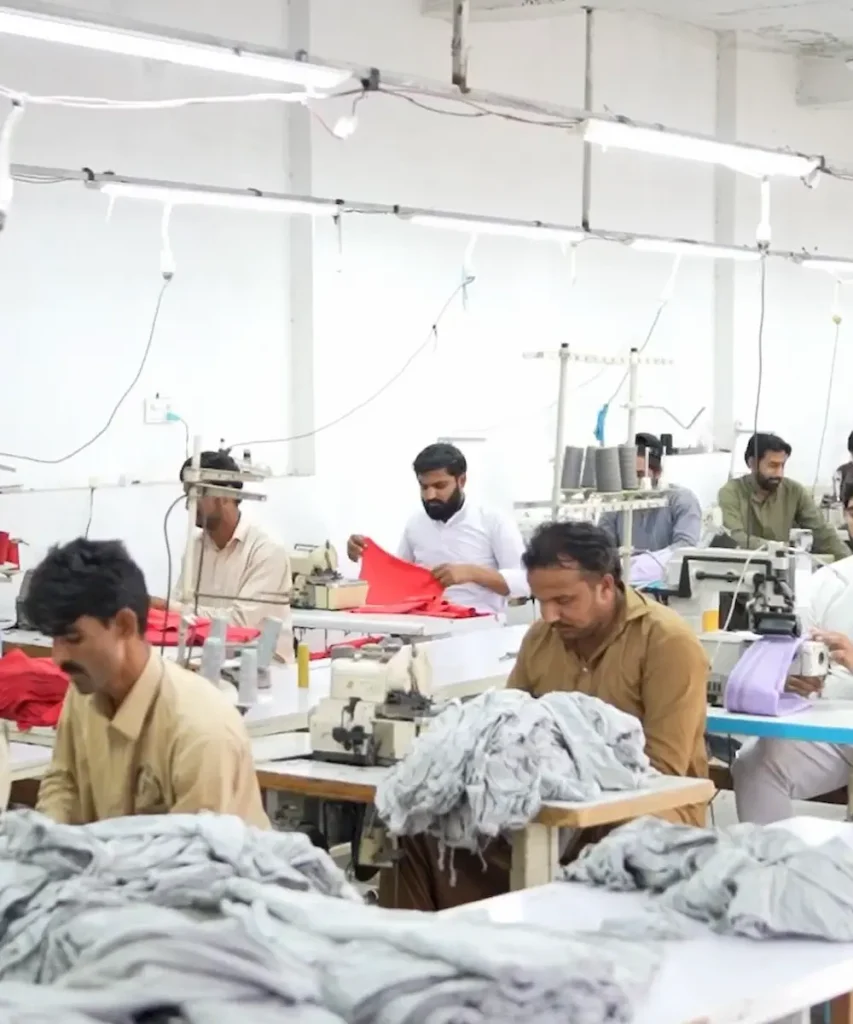
Communication during production. Because production runs through our own facility rather than a subcontracted or brokered arrangement, questions about spec, fabric, or timeline go to the people actually running the floor — not through a relay chain that adds delay every time something needs clarifying.
Bulk production. The approved sample functions as the standard the bulk run is measured against, across cutting, sewing, and finishing.
Private label. Labels, hangtags, and packaging are standard on every order, across both the streetwear side (hoodies, sweatshirts, joggers, jackets, blank apparel) and the sportswear/teamwear side — not billed as an add-on service.
Why factory-direct matters here specifically: a brand working across both a streetwear line and a team uniform program doesn’t need to coordinate two separate factories or bring in an agent to bridge them — both fall under the same production process described above.
For the complete step-by-step process — from your first idea through design, sampling, bulk production, and delivery — see our Complete Guide to Custom Sportswear Manufacturing.
Specific figures — AQL level, revision-round policy, LCL versus FCL for a given order size — genuinely vary by product and quantity, which is why this article keeps saying “confirm directly” instead of quoting one fixed number that wouldn’t hold across every order.
If you’re comparing categories for a first order:
- Custom hoodies and streetwear essentials
- Joggers
- Blank t-shirts
- Custom tote bags
- Custom football jerseys
- Softball uniforms
- Custom hockey jerseys
- Golf apparel
If you want to talk through a specific product, quantity, or timeline, reach out through our contact page or message the production team directly on WhatsApp.
Frequently Asked Questions

share the blog