The Complete Guide to Custom Sportswear Manufacturing: From Design to Delivery
The Complete Guide to Custom Sportswear Manufacturing: From Design to Delivery
A Practical Custom Sportswear Manufacturing Guide for Teams, Schools, and Brands
The biggest challenge in custom sportswear manufacturing isn’t finding a factory — it’s knowing what to expect before production begins. Every manufacturer seems to follow a different process, timelines are often vague, and it’s hard to know what information you need before requesting a quote. This custom sportswear manufacturing guide walks through the entire journey — from your first idea to final delivery — so you can understand the process before choosing a factory, and make informed decisions instead of costly guesses.
While this guide reflects how production works at RebornWear’s factory in Sialkot, Pakistan, the principles apply to custom sportswear manufacturing in general. Our goal is to help buyers understand the process so they can make informed decisions — whether they work with us or another manufacturer. The process described here reflects how orders actually move through our production facility, where custom jerseys, uniforms, and sportswear are manufactured every day.
Your Manufacturing Journey at a Glance
Direct answer: A custom sportswear order moves through nine stages, from your first idea to the finished product reaching your door.
Every successful order follows this journey, but each stage has decisions that affect quality, cost, and delivery time. The following sections explain each step in detail so you know exactly what to expect before production begins.
Two stages are where most first-time orders run into trouble, and both get dedicated sections further down: Design Proof, where fabric and decoration choices lock in, and Sample Approval, the checkpoint that exists specifically to catch problems before they multiply across a full production run. Everything between Bulk Production and Delivery — cutting, decoration, sewing, inspection, packing, documentation, shipping — gets its own detailed walkthrough in “What Happens After You Approve the Sample?”
What to Prepare Before You Contact a Manufacturer
Direct answer: A manufacturer doesn’t need every detail locked before you reach out — but the more of the following you bring when requesting a custom sportswear quote, the faster and more accurate that quote will be, and the fewer surprises show up later.
- Product type
- Estimated quantity
- Logo files
- Fabric preference (optional)
- Decoration preference (optional)
- Pantone colors (if available)
- Approximate size breakdown
- Delivery country
- Target delivery date
- Budget (optional)
Product & Quantity
Product type and order quantity influence almost every production decision — from fabric purchasing and cutting efficiency to production scheduling and final pricing. If you already have a fabric or decoration method in mind, mention it; if you don’t, that’s completely normal. An experienced manufacturer should recommend the most suitable fabric and decoration method based on how the garment will actually be used — not simply what’s easiest or cheapest to produce.
Context matters more than buyers usually expect. A school ordering 50 basketball uniforms has very different fabric and decoration requirements than a gym launching a premium private-label fitness collection — different budgets, different durability needs, different brand expectations. The more context you share, the better a manufacturer can recommend the right production approach for your specific order, not a generic one.
Design Files & Brand Colors
Logo files matter more than most first-time buyers expect. A JPG or PNG that looks fine on a screen often breaks down once it’s scaled to garment size or converted for sublimation or embroidery — a vector format (AI, EPS, or a high-resolution PDF) avoids that. Without one, expect a delay while the file gets redrawn, sometimes at extra cost.
Pantone codes matter for a similar reason: a color that looks right on your monitor can shift once it hits fabric, printer, or thread. Send a screenshot instead of a Pantone code, and you’re trusting the factory to guess your brand color rather than match it. For established brands, even a small color variation can affect brand consistency across uniforms, merchandise, and future reorders.
Delivery Information
A size breakdown doesn’t need to be final at the quote stage, but the earlier a manufacturer has a rough one, the more accurately they can plan cutting and confirm your quantity truly clears MOQ. Country of delivery and target delivery date shape the quote too — they determine whether air or sea freight makes sense, what customs and duties look like, and whether your timeline is realistic before production even starts. Leave these out, and the number you get back may only reflect the cost of making the product — not the cost of getting it to you on time.
If you have a target budget, sharing it early can help the manufacturer recommend fabrics, decoration methods, and construction options that meet your expectations. An experienced manufacturer will usually suggest different production options within your budget rather than simply telling you the project can’t be done.
| Vague Request | Specific Request |
|---|---|
| “I need jerseys.” | “I need 40 sublimated basketball jerseys for a high school team.” |
| Sending a JPG logo | Sending an AI or EPS logo |
| “Blue like our website.” | Pantone 286 C |
Design & Mockup Approval
Direct answer: A mockup exists to catch problems while they’re still cheap to fix — before a pattern is cut, a screen is burned, or a logo is digitized for embroidery. What you approve at this stage locks in decisions that get progressively more expensive to undo.
Why the Mockup Matters
A mockup isn’t the product — it’s a decision-making tool. Its whole purpose is to let you see placement, proportions, and layout on the actual garment shape before anything physical gets made. Skipping a careful look here doesn’t save time; it just moves the correction to a stage where it costs more to make.
What to Check Before You Approve It
Placement and proportion matter more than color at this stage — check that your logo sits where you actually want it relative to seams, collars, and sleeves, and that it scales sensibly across your full size range rather than looking right only on the sample size. Check text and numbers for legibility at actual garment size, not screen size. And treat on-screen color as a rough guide, not a guarantee — every monitor renders color slightly differently, which is exactly why Pantone codes matter more than a mockup’s on-screen preview.
What’s Still Easy to Change — And What Isn’t
Before approval, changes are close to free: repositioning a logo, swapping a color, adjusting number placement. Once you approve and production moves forward, the same changes mean re-cutting patterns, redoing embroidery digitizing, or reprinting screens — all of which cost real time and money. That asymmetry is the entire reason this step exists.
Choosing the Right Fabric & Decoration Method
Direct answer: Fabric and decoration method aren’t separate decisions — the fabric determines which decoration methods will even work, and both together determine cost, durability, and how the finished garment actually performs. Get these two right, and most of the rest of the order falls into place.
Fabric
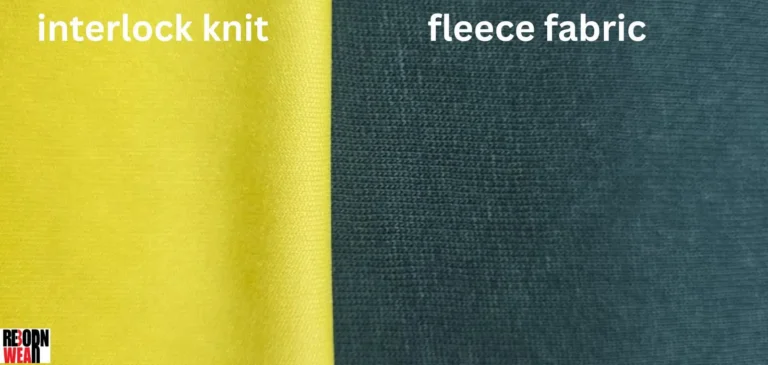
The right fabric depends on how the garment will actually be used, not just how it should look. No single fabric is “best.” The best fabric is the one that matches the garment’s intended use, decoration method, and expected lifespan.
| Fabric | Typical Applications | Key Advantages | Not Ideal For |
|---|---|---|---|
| Polyester / poly-blends | Team jerseys, performance sportswear | ||
| Cotton / cotton-blends | Streetwear, casual apparel | ||
| Performance mesh | High-intensity athletic wear |
This is a starting point, not the full picture — fabric weight, knit construction, and colorfastness all affect the final product just as much as fiber content. For the complete breakdown, see our Fabric Selection Guide →
Decoration Method
| Decoration Method | Ideal Applications | Key Advantages | Not Ideal For |
|---|---|---|---|
| Sublimation | Full-colour team jerseys | ||
| Screen Printing | Cotton graphics, streetwear, promotional apparel | ||
| Embroidery | Logos on hoodies, polos, structured garments |
The full trade-offs — including what to do when a design needs more than one method — are covered in our Sublimation vs. Screen Printing vs. Embroidery guide →
| Vague Request | Specific Request |
|---|---|
| “Make it look premium.” | Embroidered chest logo on a heavyweight hoodie. |
| “Whatever prints best.” | Sublimated jersey — full color, polyester. |
Pattern Making, Sizing & Sample Approval
Direct answer: Every garment starts from a single graded pattern — one master shape sized up or down across your full size range, with small, defined tolerances that account for normal manufacturing variation. The sample made from that pattern is the last real checkpoint before that pattern gets cut across your entire order.
Grading determines how consistent your sizing feels across a whole team roster, not just how one sample fits. A pattern graded carelessly might look fine at a single size and drift noticeably at the extremes of your range — which is exactly why the sample stage exists.
A sample isn’t a formality. It’s the only point in the entire process where you can check fit, fabric hand-feel, stitch quality, and decoration placement on a real, physical garment before that decision gets multiplied across your full quantity. Reviewing it from photos alone skips the part that actually protects your order.
Documents You’ll Need Before Production
Direct answer: Once a sample is approved, production needs a different, more final set of information than what got you a quote — this is the point where everything gets locked, not estimated.
- Finalized artwork (vector, not the working draft) — this is what actually gets cut into screens or digitized for embroidery.
- Confirmed Pantone codes — no longer “close enough,” now the exact match production works from.
- Locked size breakdown — the real quantities per size, since cutting starts from this number.
- Player names and numbers, if applicable — confirmed spelling avoids expensive reprints.
- Confirmed shipping address — determines packing, labeling, and freight planning.
- Purchase order — the formal confirmation production works against.
- Decoration specifications — exact placement and sizing, signed off, not approximate.
Each of these is a decision that gets expensive to reverse once cutting or decoration has started — which is why production waits for them to be locked, not just discussed.
What Happens After You Approve the Sample?
Direct answer: Sample approval isn’t the last step before shipping — it’s the point where a single garment becomes a full production run. Here’s what actually happens between approval and your box leaving the factory.
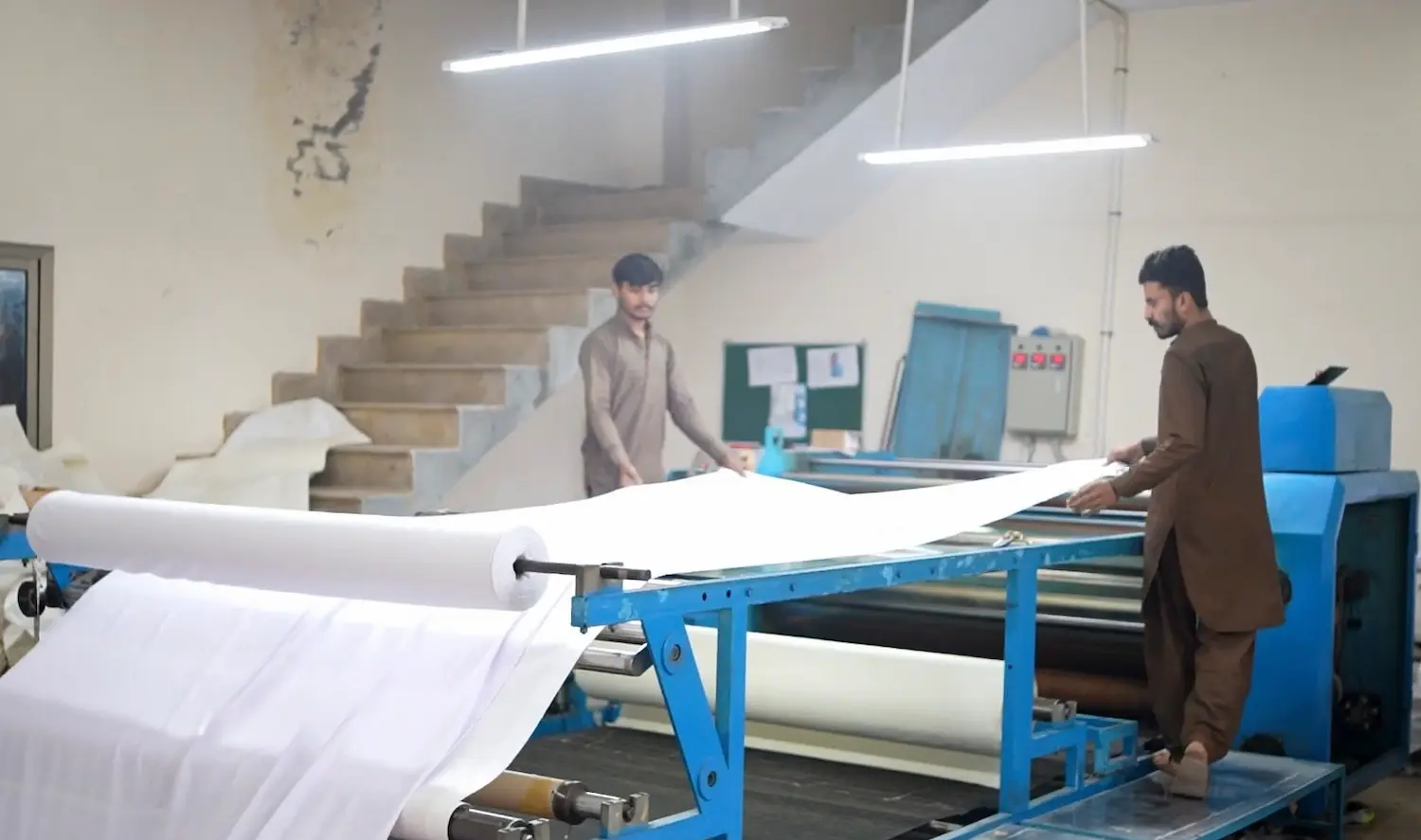
- Fabric procurement — bulk fabric is sourced or dyed to match the approved sample
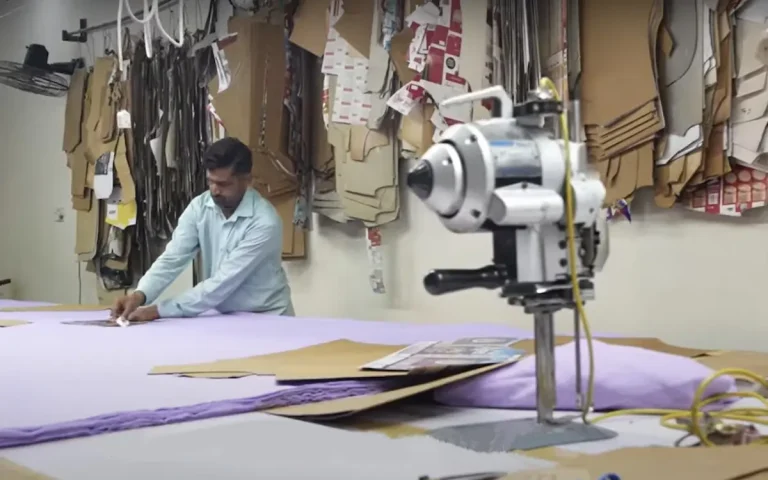
- Bulk cutting — the graded pattern is cut across your full size breakdown
- Decoration application — sublimation, screen printing, or embroidery runs at scale
- Sewing — cut and decorated pieces are assembled into finished garments
- Thread trimming — loose threads are cleaned up before inspection
- Washing, where applicable — some fabric and decoration combinations require it; others don’t
- Quality inspection — checked against the approved sample, not just a general standard
- Packing — garments are folded, bagged, or boxed per your specification
- Carton labeling — cartons are marked with the details customs and freight forwarders need
- Export documentation — commercial invoice, packing list, and any certificates your destination requires
- Shipping — the finished order leaves the factory
Production Timeline & MOQ
Direct answer: There’s no single number that applies to every order — timelines and MOQs depend on product complexity, decoration method, order size, and the season you’re ordering in. What follows are realistic ranges, and what actually moves them.
| Stage | Typical Timeframe | What Affects It |
|---|---|---|
| Design Proof | 24–48 hours | Design complexity, revision rounds |
| Sample Production | Usually 5–10 business days | Product complexity, decoration method |
| Bulk Production | Generally 2–4 weeks after sample approval | Order quantity, fabric availability, production schedule |
| Quality Inspection | Ongoing, plus a final check | Performed throughout production, with a final inspection before packing |
| Shipping (Air) | Typically 5–10 business days | Destination, customs clearance |
| Shipping (Sea) | Typically 25–45 days | Destination port, shipping line |
The biggest swing factors across all of these: order quantity, product complexity, fabric availability, printing or embroidery requirements, peak production season, and shipping method. Two orders that look similar on paper can land on very different timelines once one of these varies.
Minimum Order Quantity
MOQ varies by product, construction, and decoration method — a sublimated jersey, a screen-printed t-shirt, and an embroidered hoodie all carry different minimums for reasons that have nothing to do with pricing strategy. Sports jerseys typically start from smaller set sizes, while streetwear items like t-shirts, hoodies, and jackets generally start higher. Color choice matters too — a stock shade already sitting in inventory carries a lower minimum than a custom-matched color that requires its own dedicated production run.
For the full breakdown of where MOQ actually comes from and why two manufacturers can quote different minimums for what looks like the same product, see our Private Label Manufacturing Guide →
Actual MOQ depends on your specific product, customization requirements, and production method — contact us for a confirmed quotation.
Manufacturer vs. Reseller: Why Direct Matters
Direct answer: Working with a factory directly and working through a reseller or trading company can produce a similar-looking product — but the process behind it, and how much control you have over it, is very different.
| Factor | Reseller / Trading Company | Direct with the Manufacturer |
|---|---|---|
| Pricing | Includes a markup layer you don’t see | Reflects actual production cost |
| Communication | Passes through an intermediary | Direct with the people making your order |
| Quality accountability | Split between reseller and factory | Traceable to a single production team |
Neither model is inherently dishonest — plenty of resellers manage this well. The difference is visibility: direct communication with the factory removes a layer between a decision and the person carrying it out.
If you’re building a brand and weighing this against using a sourcing agent to coordinate multiple product categories, that trade-off is really about bandwidth and coordination rather than trust — the deeper breakdown is in our Private Label Manufacturing Guide →
Red Flags When Choosing a Manufacturer
Direct answer: Most manufacturing problems are visible before you ever place an order — if you know what to look for during the quoting conversation.
- Prices that seem unrealistically low — usually means a corner is being cut somewhere: fabric quality, construction, or quality control.
- No factory photos or video — a real production facility should be easy for a manufacturer to show you.
- No sample approval step offered — going straight to bulk production removes your only checkpoint before the full order is committed.
- Vague production timelines — “a few weeks” without ranges tied to your specific order is a guess, not a plan.
- No mention of quality control — if inspection never comes up unprompted, ask directly how it works.
- No references or past work — a manufacturer with real experience should be able to show it.
None of these alone is disqualifying, but a manufacturer who can’t address more than one of these clearly is worth a second look before you commit.
Common Mistakes Buyers Make
Direct answer: Most costly mistakes happen early — at the quote or design stage — where a small gap in information turns into a delay or extra cost much later in production.
| Mistake | Where It Happens | How to Avoid It |
|---|---|---|
| Sending a low-resolution logo | Quote stage | Provide vector files (AI, EPS, or high-res PDF) |
| Approving a sample from photos only | Sample stage | Request the physical sample in hand before sign-off |
| Assuming one timeline fits every order | Planning stage | Ask for a timeline specific to your product, quantity, and decoration method |
| Skipping a spelling/number check on rosters | Pre-production | Confirm names and numbers before production locks |
| Choosing decoration method before confirming fabric | Design stage | Confirm fabric first — it determines which methods will actually work |
Questions to Ask a Manufacturer Before You Order
Direct answer: A short list of questions that tend to reveal more than a sales pitch will — how directly a manufacturer answers these tells you as much as the answers themselves.
- What does your sample approval process look like?
If there isn’t one, that’s worth knowing before you commit. - What’s a realistic timeline for my specific order?
Not a generic range, but one based on your quantity, fabric, and decoration method. - How is quality checked, and at what stages?
Ongoing inspection is different from a single check at the end. - What happens if I need to make a change after sample approval?
A manufacturer’s answer here tells you a lot about how flexible production really is. - Can I see photos or video of your production facility?
A reasonable request that a real manufacturer can usually accommodate. - What’s included in the quoted price, and what isn’t?
Shipping, duties, and sampling costs aren’t always bundled the same way twice.
If you’re launching your own apparel brand rather than ordering team or club apparel, there’s a sharper set of questions worth asking before any deposit changes hands — covering color minimums, inspection standards, and private label depth. See the deposit-stage questions in our Private Label Guide →
How RebornWear Approaches Each Stage
Every stage in this guide reflects how orders move through our own production floor in Sialkot: a documented quote conversation, a real physical sample before bulk cutting starts, inspection carried through production rather than saved for the end, and clear communication on timeline and MOQ before production begins — not after.
We don’t skip the sample stage, and we don’t treat quality control as a single checkpoint at the end of the line. If you’re evaluating manufacturers using the questions and red flags above, we’re glad to answer them directly.
If you’re launching an apparel brand and want the fuller picture — how AQL inspection actually works, what determines your real MOQ, and how private label depth breaks down — that’s covered in our Private Label Manufacturing Guide →
Frequently Asked Questions
What’s the minimum order quantity for custom sportswear?
MOQ varies by product, construction, and decoration method — a stock color generally carries a lower minimum than a custom-matched one, since custom dye lots require their own dedicated production run. See our Private Label Manufacturing Guide for the full breakdown of where MOQ actually comes from.
How long does custom sportswear production take?
Design proof typically takes 24–48 hours, sample production 5–10 business days, and bulk production generally 2–4 weeks after sample approval — though order quantity, fabric availability, and decoration method all affect the real timeline.
Do I need a sample before bulk production?
Yes — a sample is the only checkpoint where you can check fit, fabric, and decoration placement on a physical garment before that decision is multiplied across your full order.
What files do I need to get started?
For a quote, an approximate product type, quantity, and logo file (ideally vector — AI, EPS, or high-res PDF) is enough to start. Finalized artwork, confirmed Pantone codes, and a locked size breakdown are needed once production begins.
Is it cheaper to work directly with a manufacturer instead of a reseller?
Often, yes — direct pricing reflects actual production cost rather than a reseller’s markup on top of it. Direct communication also means fewer delays caused by information passing through an intermediary.
How is quality controlled during production?
Inspection happens throughout production, not just at the end, with a final check before packing to confirm the finished order matches the approved sample.
Conclusion
Ordering custom sportswear stops feeling uncertain once you understand what actually happens between your first idea and the box arriving at your door — the decisions that are yours to make, the checkpoints that protect your order, and the questions worth asking before you commit to a manufacturer.
None of this requires you to become an expert in garment production. It just requires knowing enough to ask the right questions, recognize a manufacturer who can answer them clearly, and understand which stages genuinely deserve your attention versus which ones you can safely leave to the factory.
If you’re planning a custom sportswear order — for a team, a school, a gym, or a brand — reach out through our contact page and we’re glad to walk through where your project fits into this process.