
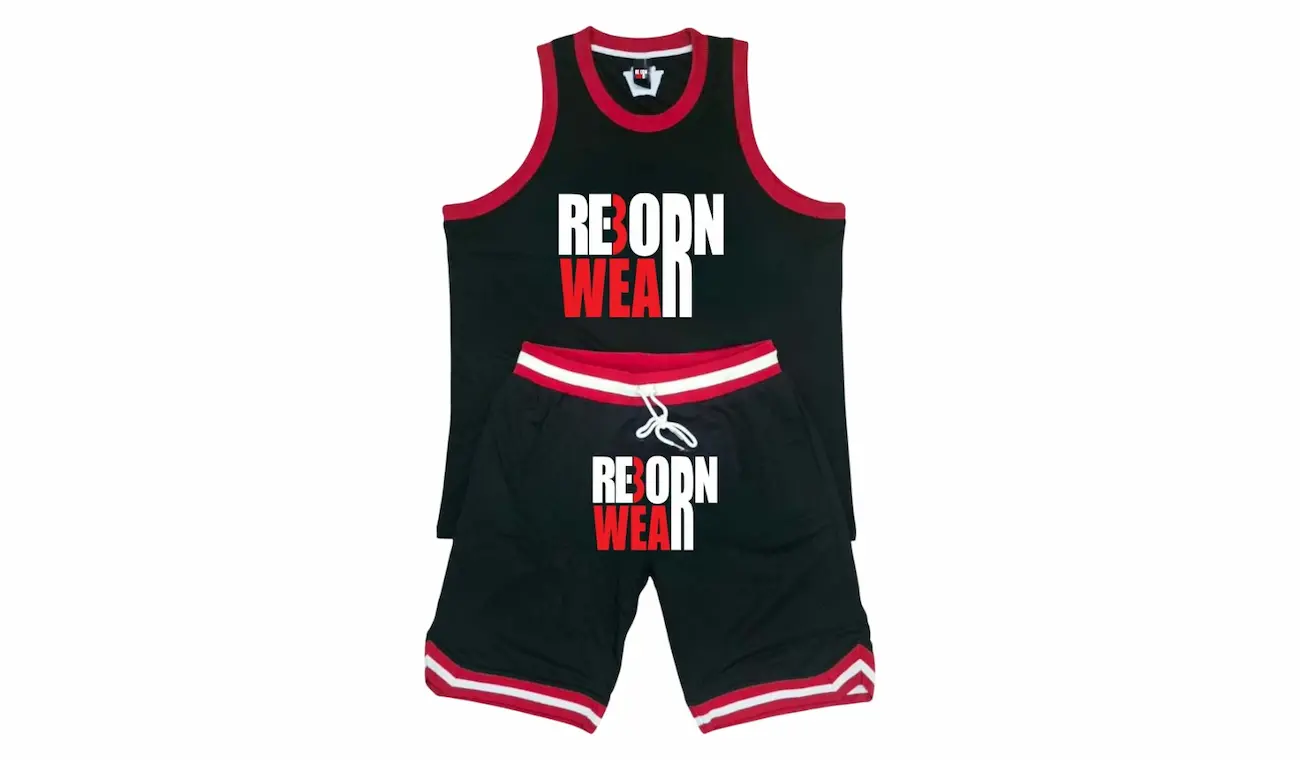
Basketball Uniform Sizing Guide: How to Measure Jerseys & Shorts for the Perfect Fit
A basketball jersey or pair of shorts that fits wrong doesn’t just look bad in team photos — it changes how a player moves. A jersey too tight through the shoulders restricts the arm swing on a jump shot. Shorts that shift during a defensive slide are a distraction a player shouldn’t have to manage mid-game. For a coach or equipment manager ordering fifteen sets at once, a sizing mistake isn’t something you fix at a store counter — it’s a new production run, on a new timeline, often arriving after the season has already started.
This basketball uniform sizing guide explains the mechanics behind the chart, not just the chart itself: why one manufacturer’s Large doesn’t match another’s, how grading actually works, why age is a bad predictor of youth sizing, and where reversible jerseys quietly break the usual sizing logic. That’s the part a general sports website won’t tell you, because it requires having actually built the garment, not just sold it.
At a Glance: What You’ll Learn
- How a basketball jersey should fit differently than a regular tee, and why that difference is intentional
- How to correctly measure chest, waist, hips, and inseam — without the common mistakes that throw off the result
- Why youth sizing shouldn’t be based on age alone
- How reversible jerseys can affect fit in ways a standard jersey doesn’t
- Why two manufacturers’ size charts for “Adult Large” can differ meaningfully
- A team-ordering checklist to prevent the most common bulk-order sizing mistakes
Key Takeaway: Basketball uniform sizing mistakes are rarely about the chart being wrong — they’re usually about how the measurement was taken or which size chart was actually referenced. Getting both right prevents most reorders.
Why Correct Sizing Actually Matters
Incorrect basketball uniform sizing affects performance, not just appearance — a jersey too tight limits shoulder mobility on a shot, while shorts that are too loose can shift during play. For a team order, a sizing mistake also means delay: a reorder, re-production, and re-shipping before the team has usable uniforms.
For an individual buying one jersey, a sizing miss is annoying but low-stakes — return it, try another size. For a coach or athletic director ordering for an entire roster, the stakes are different. A batch of fifteen jerseys built to the wrong size isn’t something you swap at a store counter. It’s a new production run, on a new timeline, often landing after the season has already started.
This is why sizing deserves more attention upfront than it usually gets. A few extra minutes taking a measurement correctly is meaningfully cheaper than a mid-season reorder.
Key Takeaway: For individual buyers, a sizing mistake is a minor inconvenience. For a team order, it’s a full reproduction cycle — which is why getting the measurement right the first time matters more here than it does for ordinary clothing.
How a Basketball Jersey Should Actually Fit
A basketball jersey is cut looser through the shoulders and armholes than a casual t-shirt, specifically to allow a full, unrestricted arm swing during a shot or pass. The torso should sit close enough to avoid excess fabric flapping during play, but never so tight that it limits the chest expansion needed for hard breathing during a game.
This lines up with how basketball’s own governing bodies think about fit — the NCAA’s official uniform guidelines call for jerseys that allow freedom of movement without being excessively loose or tight, the same principle any manufacturer should be building toward.
This is the part most buyers get wrong: they size a jersey the way they’d size a t-shirt, checking whether it looks fitted standing still. But a jersey is worn in motion the entire time it’s on the body. The armhole cut needs room a t-shirt doesn’t — raise your arm overhead like you’re going for a rebound, and a well-fitted jersey shouldn’t ride up and expose the midriff, but it also shouldn’t pull tight across the shoulder blades.
Length is a genuine style choice, not a fit problem. Traditional jerseys sit longer, meant to tuck into the shorts. Many players today prefer a shorter, more fitted cut. Neither is “correct” — but a team should agree on one before ordering, since a mixed-length roster looks inconsistent in photos even when every individual jersey fits its wearer correctly.
Key Takeaway: A basketball jersey needs armhole and shoulder room a casual t-shirt doesn’t, to allow a full overhead reach without riding up or restricting movement. Length is a style choice the team should agree on — not a fit problem to solve individually.
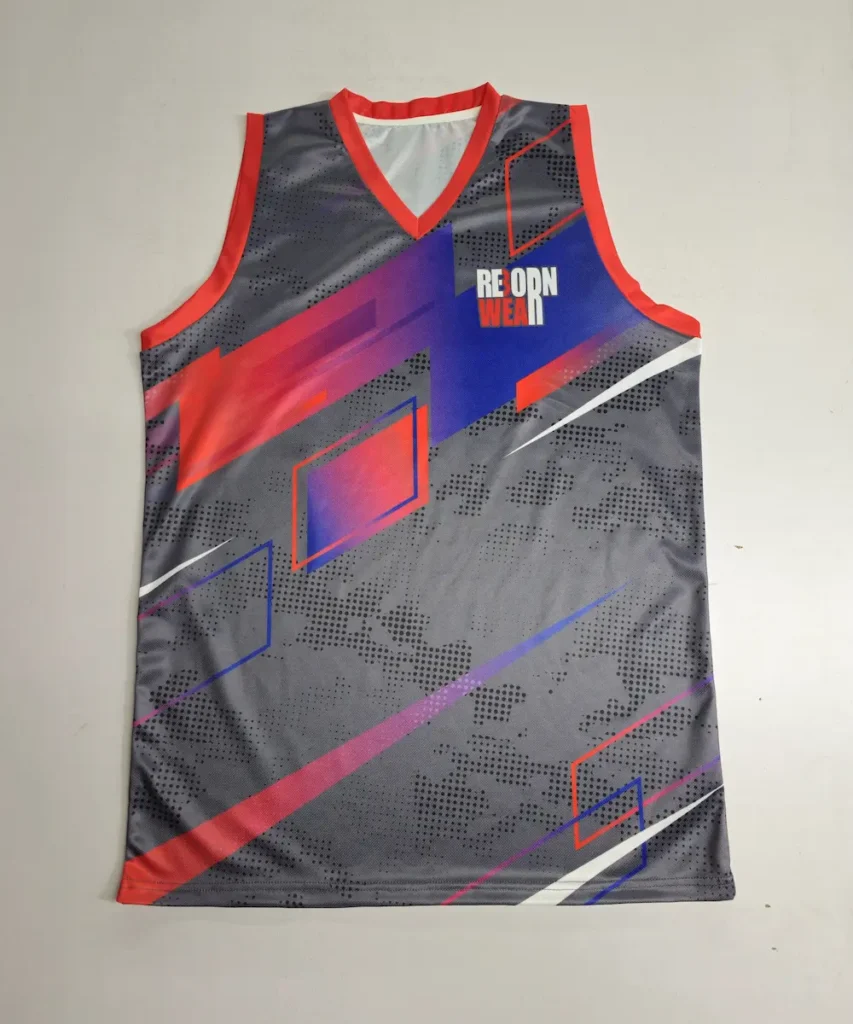
How Basketball Shorts Should Actually Fit
Basketball shorts should sit at or just below the natural waist without needing constant adjustment, with enough room through the thigh for a full stride and lateral movement, but not so loose that they shift position during a defensive slide.
Waistband fit matters more here than on most athletic bottoms, because the sport involves constant lateral movement, jumping, and contact — all of which will expose a waistband sized even slightly too loose. Elastic and drawcord waistbands offer some tolerance range, but they can’t fully compensate for a size chosen too far from what a player actually needs.
Inseam length is a genuine style spectrum in basketball specifically, more so than in most other sports. Some players prefer a longer inseam for coverage and a specific look; others prefer a shorter cut for unrestricted movement. A team spec should settle on one inseam length across the roster, since — like jersey length — this is a consistency decision, not something that needs individual customization per player.
Key Takeaway: Basketball shorts need a secure waistband more than a tight overall fit — the sport’s constant lateral movement will expose a waist that’s even slightly too loose. Inseam length should be a team-wide decision, not left to individual preference mid-order.
Measurements in inches. Tolerance ±1″. Waist measurements reflect the elastic in its relaxed state. Shorts include an elastic waistband with drawstring.
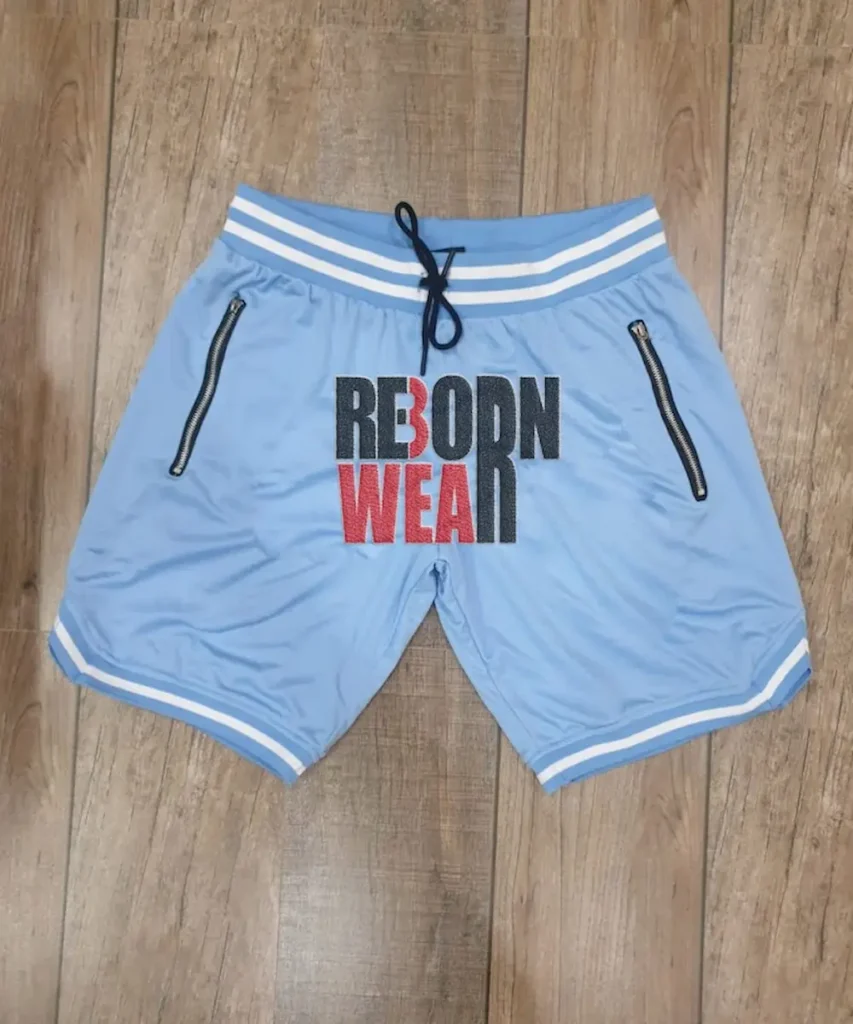
Using This Basketball Uniform Sizing Guide to Measure Correctly
Knowing how to measure for a basketball jersey and shorts correctly means using a snug — not tight — tape measure directly against the body over minimal clothing. Never over a hoodie, jacket, or bulky layer, which is the single most common cause of oversized team orders.
Chest: Measure around the fullest part of the chest, keeping the tape level across the back and under the arms. The tape should sit flat and snug, but shouldn’t compress the chest — think firm but breathable, not tight.
Waist: Measure around the natural waistline without pulling the tape tight — typically just above the belly button, not at the hip bone. This is the measurement most frequently taken incorrectly, since people default to measuring at the pant line instead of the actual waist.
Hips: Measure around the fullest part of the hips, keeping the tape level all the way around. This matters most for shorts fit, since hip measurement often determines size more than waist measurement does for players with a fuller build.
Inseam: Measure from the crotch seam to the bottom of the leg, with the player standing naturally rather than sitting — a seated inseam measurement is a common source of shorts arriving shorter than expected.
Length (jerseys): Measure from the highest shoulder point to the bottom hem. This figure determines whether a jersey sits at a traditional longer length or a shorter, more fitted cut.
Chest
Fullest part, tape level.
Waist
Natural waistline, not pulled tight.
Hip
Fullest part, tape level.
Inseam
Crotch seam to leg bottom, standing.
Length
Shoulder point to bottom hem.
Always measure over light clothing — never over a hoodie or thick outer layer. Thick outer layers compress unevenly, so the measurement isn’t just larger, it’s inconsistently larger depending on how the fabric folds under the tape. This produces a size recommendation that’s not just oversized, but oversized unpredictably — worse than a consistent error, because it can’t be corrected with a simple across-the-board size-down.
Key Takeaway: The most common source of team-order sizing errors isn’t a wrong measurement — it’s measuring over a hoodie or thick layer, which distorts the number unevenly rather than just adding a fixed amount. Measure over light clothing every time.
Youth Basketball Jersey Sizing: Why Age Alone Isn’t a Reliable Guide
Age-based sizing fails when sizing a basketball jersey because growth rate varies enormously between individual kids at the same age. A real chest and waist measurement is the only reliable input against a youth basketball jersey size chart, even for a league ordering an entire age bracket at once.
This matters more in basketball than in some other youth sports, because rosters often span a wide developmental range within one age group — a growth spurt can shift a player’s real size by a full category in a way age-based charts can’t anticipate. A coach ordering “Youth Medium for all 10-year-olds” based purely on age will get a roster where some jerseys fit correctly and others clearly don’t, with no way to predict which in advance.
| Size | Age* | Chest (Body) | Finished Chest | Length |
|---|---|---|---|---|
| YXS | 5–6 | 24–25″ | 30″ | 20″ |
| YS | 7–8 | 26–27″ | 32″ | 22″ |
| YM | 9–10 | 28–29″ | 34″ | 24″ |
| YL | 11–12 | 30–31″ | 36″ | 26″ |
| YXL | 13–14 | 32–34″ | 38″ | 28″ |
| Size | Waist | Outseam | Inseam |
|---|---|---|---|
| YXS | 20–21″ | 14″ | 5″ |
| YS | 21–22″ | 15″ | 5.5″ |
| YM | 22–24″ | 16″ | 6″ |
| YL | 24–26″ | 17″ | 6.5″ |
| YXL | 26–28″ | 18″ | 7″ |
Ordering for growing players mid-season: there’s a genuine trade-off here. Sizing slightly up gives room for growth across a season, but too much room undermines the fit and movement benefits described earlier. There’s no universal right answer — it depends on how early in a growth phase the player is and how long the uniform needs to last before replacement. This is worth a direct conversation with whoever’s placing the order, not a blanket rule.All youth shorts include an internal drawstring, which gives extra flexibility for a player who falls between two waist sizes — useful when sizing up slightly for growth room, since the drawstring lets the actual fit be adjusted tighter without ordering a size down.
Key Takeaway: Age is a poor predictor of basketball jersey size because growth rate varies too much between individual kids. A real chest and waist measurement — not a birth year — should drive the size selection against the youth chart, even for whole-roster orders.
Adult Basketball Jersey Sizing Considerations
Adult basketball jersey sizing follows the same measurement principles as youth sizing, but with a wider range of body types across a roster. A team order is more likely to need a genuine size spread rather than one dominant size, even among players of similar height.
Adult recreational and competitive teams tend to have more build variation than youth teams of the same sport, simply because adult bodies have finished developing into their individual shapes. An equipment manager ordering for an adult team should expect, and plan for, a real spread across the available size range — not assume most of the roster clusters around one or two sizes.
Key Takeaway: Adult rosters need a genuine size spread planned for upfront — assuming most players cluster around one or two sizes is a common and avoidable ordering mistake.
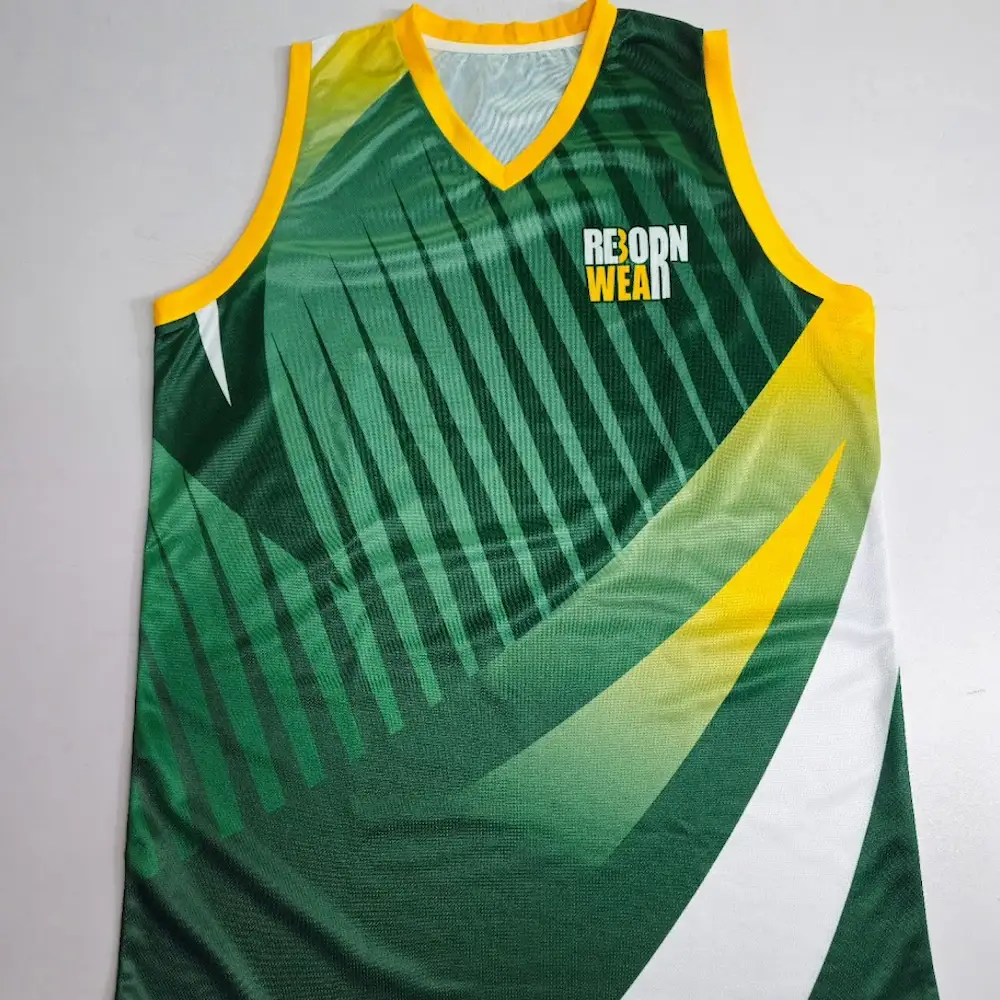
| Size | Chest (Body) | Finished Chest | Front Length |
|---|---|---|---|
| XS | 32–34″ | 38″ | 27″ |
| S | 35–37″ | 40″ | 28″ |
| M | 38–40″ | 44″ | 29″ |
| L | 41–43″ | 48″ | 30″ |
| XL | 44–46″ | 52″ | 31″ |
| 2XL | 47–49″ | 56″ | 32″ |
| 3XL | 50–52″ | 60″ | 33″ |
| 4XL | 53–55″ | 64″ | 34″ |
| Size | Waist | Hip | Outseam | Inseam |
|---|---|---|---|---|
| XS | 26–28″ | 36″ | 19″ | 8″ |
| S | 28–30″ | 39″ | 20″ | 8.5″ |
| M | 30–32″ | 42″ | 21″ | 9″ |
| L | 32–34″ | 45″ | 22″ | 9.5″ |
| XL | 34–36″ | 48″ | 23″ | 10″ |
| 2XL | 36–39″ | 51″ | 24″ | 10.5″ |
| 3XL | 39–42″ | 54″ | 25″ | 11″ |
Women’s Basketball Sizing Considerations
Women’s and men’s basketball sizing is built from different base patterns, not the same pattern resized. A women’s medium and a men’s medium are not interchangeable, even when chest measurements happen to overlap.
This is a common and understandable mistake when a team orders both men’s and women’s rosters in the same batch. Waist-to-hip ratio, torso length, and shoulder width proportions differ enough between the two base patterns that matching by a single measurement — chest circumference alone — doesn’t guarantee an equivalent fit. Whoever is placing a mixed order should confirm which chart applies to which roster, rather than assuming a shared numbering system.
Key Takeaway: Women’s and men’s basketball sizing is built from different base patterns, not the same pattern resized. A size label shared between the two — like “Medium” — is not guaranteed to fit equivalently.
| Size | Bust (Body) | Finished Bust | Front Length |
|---|---|---|---|
| XS | 30–32″ | 36″ | 24″ |
| S | 32–34″ | 38″ | 25″ |
| M | 34–36″ | 40″ | 26″ |
| L | 36–39″ | 43″ | 27″ |
| XL | 39–42″ | 46″ | 28″ |
| 2XL | 42–45″ | 49″ | 29″ |
| Size | Waist | Hip | Outseam |
|---|---|---|---|
| XS | 24–26″ | 34″ | 16″ |
| S | 26–28″ | 36″ | 17″ |
| M | 28–30″ | 39″ | 18″ |
| L | 30–33″ | 42″ | 19″ |
| XL | 33–36″ | 45″ | 20″ |
| 2XL | 36–39″ | 48″ | 21″ |
Reversible Jerseys: A Sizing Consideration Most Guides Skip
Reversible jerseys sometimes require a size adjustment compared to a standard single-layer jersey, because the doubled fabric construction adds bulk that can make the same labeled size fit slightly differently than its single-layer counterpart.
Reversible jerseys are genuinely useful — one garment doing the work of a home and away jersey — but the two-layer construction isn’t identical in drape and stretch to a single-layer jersey, even when both are labeled the same size. Some players also report that reversible jerseys feel warmer and heavier during play, a comfort factor worth mentioning to a team before committing to reversibles for an entire roster, separate from the sizing question itself.
| Style | Recommended Fit |
|---|---|
| Single Layer Jersey | True to Size |
| Reversible Jersey | Slightly Relaxed Fit |
| Performance Fit | Athletic Fit |
| Practice Jersey | Relaxed Fit |
| Shooting Shirt | Relaxed Fit |
Key Takeaway: doubled-fabric construction can shift the fit slightly… same labelled size” — this was already fixed once earlier in this exact thread and has reverted. Fix to “doubled fabric construction can shift fit slightly… same labeled size.
Common Sizing Mistakes That Lead to Reorders
| Mistake | Why It Happens | How to Avoid It |
|---|---|---|
| Measuring over a hoodie or jacket | Assumed convenience, doesn’t seem like it matters | Always measure over light clothing |
| Sizing by age instead of measurement | Faster for a coach managing a large roster | Collect real chest/waist measurements, even if it takes longer upfront |
| Assuming men’s and women’s sizes match | Same size label looks identical on a chart | Confirm which base pattern applies before ordering a mixed roster |
| Measuring seated for inseam | Feels more comfortable/practical to measure | Measure standing, in natural posture |
| Ordering one size for a whole youth team | Simpler than individual measurements | Expect a real size spread even within one age bracket |
| Not accounting for reversible fabric bulk | Assumed reversible = same fit as standard | Confirm sizing separately when switching to reversible jerseys for the first time |
Team Ordering Checklist
- Every player has been measured individually — chest, waist, and inseam — not sized by age or by looking at last year’s roster
- Measurements were taken over light clothing, not a hoodie or jacket
- The team has agreed on jersey length (traditional vs. shorter/fitted) and shorts inseam length as a roster-wide decision
- If ordering both men’s and women’s uniforms, both use their correct respective size chart — not one shared chart
- If switching to reversible jerseys for the first time, sizing has been confirmed rather than assumed identical to standard jerseys
- Growing youth players have a size decision that accounts for the season length remaining, not just their current measurement
- A sample has been reviewed and approved before the full roster’s bulk order goes into production
How Manufacturers Actually Build a Size Chart
A size chart isn’t an arbitrary set of numbers — it comes from grading, the process of scaling a base pattern up or down by consistent increments across a size range, starting from one fitted sample pattern rather than being invented separately for each size.
Grading works from a single base size — often a middle size like Medium or Large — that’s pattern-drafted and fit-tested first. Every other size in the chart is then generated by scaling that base pattern by defined increments, a “grade rule,” across chest, length, and other key measurements. This is why a well-made size chart has consistent, proportional jumps between sizes, rather than each size feeling independently designed.
This also explains why measurement tolerances exist in garment manufacturing. A stated “Large: 44-inch chest” isn’t a single exact number achievable on every physical unit — it’s a target with a small acceptable variance, because cutting and sewing at scale can’t achieve laser precision on every single piece. Our own basketball size charts, for example, carry a tolerance of ±1 inch across every listed measurement. A buyer expecting zero variance between individual jerseys in the same labeled size is expecting something garment manufacturing generally doesn’t promise.
Key Takeaway: A size chart comes from grading a single base pattern across a range, not from independently designing each size. This is also why a small measurement tolerance exists on every unit — expecting zero variance between same-size garments isn’t realistic in garment production.
Why Different Brands’ Size Charts Rarely Match
Two manufacturers’ “Adult Large” can differ by a meaningful margin because each brand grades from its own base pattern and fit philosophy. There’s no single industry-standard basketball jersey size chart that all manufacturers are grading against.
This is why a player who’s a consistent Large across several other brands might find themselves between sizes with a new manufacturer. It’s not that one chart is right and the other wrong — they’re simply built from different starting patterns and different assumptions about how loose or fitted a given size label should be. This is exactly why relying on a real measurement, rather than a size label carried over from a different brand, is the safer approach for a first order with any new manufacturer.
Key Takeaway: No industry-standard basketball jersey size chart exists — every manufacturer grades from its own base pattern. A consistent size with one brand doesn’t guarantee the same fit with another, which is why a real measurement matters more than a remembered size label.
How RebornWear Approaches Sizing and Sampling
Because size charts vary this much between manufacturers, and because a bulk team order can’t easily absorb a sizing mistake, sampling matters more here than it might for a single-garment purchase. A physical sample — checked against real measurements, not just a technical spec sheet — is the stage where a fit issue should be caught, before it’s replicated across an entire roster.
For teams sourcing team apparel with private label branding, this same sampling discipline applies whether the order is for jerseys, shorts, or a full set. The approved sample functions as the standard the bulk production run is measured against, not a loose approximation of what the final product will be.
If you’re planning a first order and want to confirm sizing specifics for your roster, that’s a conversation worth having directly rather than assuming any single chart — ours included — applies without verification for your exact players.
Once sizing is sorted and you’re ready to move toward an order, the details on materials, construction, and the ordering process live on our main product page rather than here. That’s the standard this basketball uniform sizing guide is built around — a real measurement, a real sample, and no guessing.
Related pages:
If you want to talk through sizing for a specific roster or order, reach out through our contact page or message the production team directly on WhatsApp.
Conclusion
This basketball uniform sizing guide exists to make that first measurement count, so the reorder never has to happen. Basketball uniform sizing mistakes are rarely about a bad chart — they’re almost always about how the measurement was taken, which chart was actually referenced, or an assumption (age, a shared label across brands, a hoodie left on during measuring) that quietly threw off the result. Getting the measurement right the first time is the cheapest step in the entire ordering process, and the one most likely to be skipped under time pressure.